● NSE 6 - Network Security 7.6 Support Engineer Materials
- Over 30 Students Passed NSE 6 - Network Security 7.6 Support Engineer Exam (FCSS_NST_SE-7.6 Exam) Using This Dump – Join Them Today!
- Less Than 125 Verified Questions for the NSE 6 - Network Security 7.6 Support Engineer Dump (FCSS_NST_SE-7.6 Dump)
- 100% Score in the Real Network Security 7.6 Support Engineer (FCSS_NST_SE-7.6 Exam) at the Pearson VUE Testing Center
- Less Than 125 Verified Questions for the NSE 6 - Network Security 7.6 Support Engineer Dump (FCSS_NST_SE-7.6 Dump)
- 100% Score in the Real Network Security 7.6 Support Engineer (FCSS_NST_SE-7.6 Exam) at the Pearson VUE Testing Center
Question #1
Question #2

Refer to the exhibit.
Partial output of the real-time LDAP debug is shown.
Which two actions can the administrator take to resolve this issue?
(Choose two answers)
- A. Ensure the account is active.
- B. Ensure the user is a member of at least one AD group to ensure that step 4 of the LDAP authentication process is successful.
- C. Ensure the user is providing the correct user credentials.
- D. Ensure the user logs in using ‘John Smith’ not ‘jsmith’.
Question #3
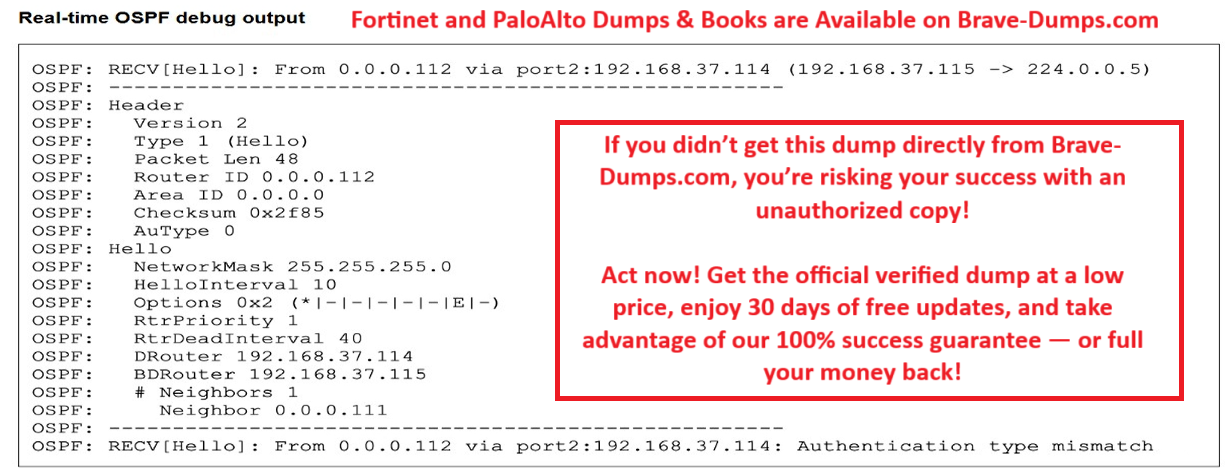
Refer to the exhibit.
Partial output of a real-time OSPF debug is shown.
Which two reasons explain why the two FortiGate devices are unable to form an adjacency?
(Choose two answers)
- A. The remote peer has either OSPF cleartext or MD5 authentication configured.
- B. There is an OSPF authentication configuration mismatch.
- C. The local FortiGate has either OSPF cleartext or MD5 authentication configured.
- D. The local FortiGate does not have OSPF authentication configured.
Question #4
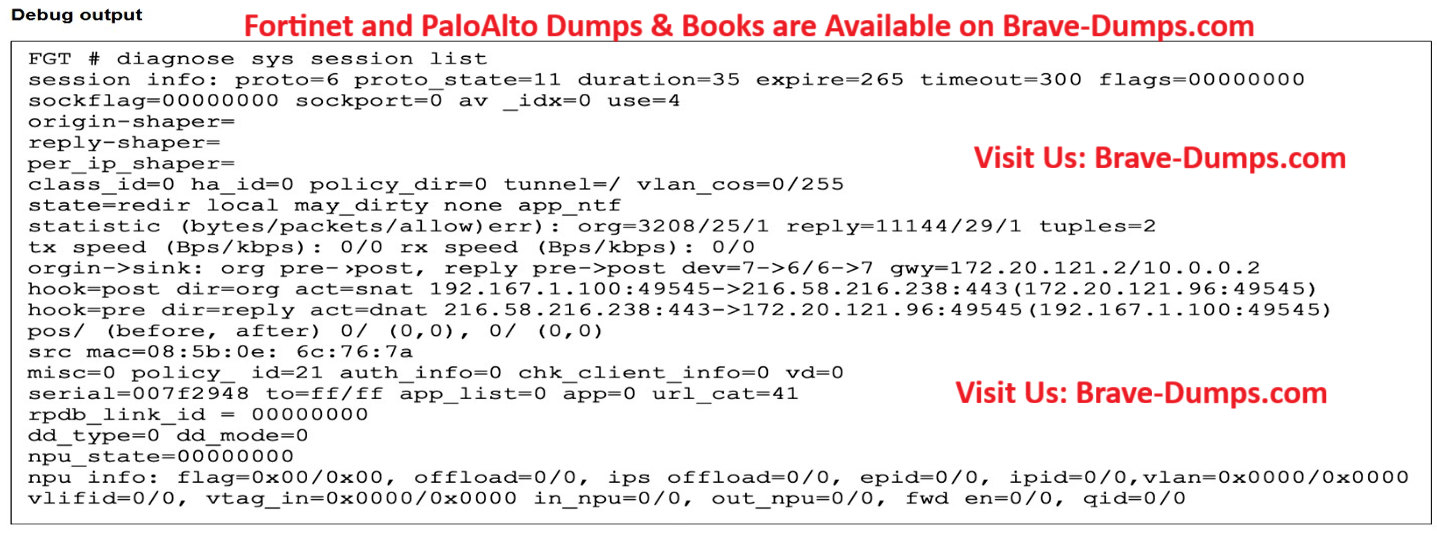
Refer to the exhibit.
Which two statements about FortiGate behavior relating to this session are correct?
(Choose two answers)
- A. FortiGate redirected the client to the captive portal to authenticate so that a correct policy match could be made.
- B. FortiGate either initiated the session or the session terminates at FortiGate.
- C. FortiGate forwarded this session without any inspection.
- D. FortiGate is performing a security profile inspection using the CPU.
Question #5

Refer to the exhibit.
The partial output of FortiOS kernel slabs is shown.
Which statement about total slab size is true?
(Choose one answer)
- A. The total slab size of the ip_session slab is 14080 kB and is associated with the user space.
- B. The total slab size of the tcp_session slab is 7500 kB and is associated with the kernel.
- C. The total slab size of the UDPv6 slab is 14080 kB and is associated with the user space.
- D. The total slab size of the ip6_session slab is 1472 kB and is associated with the kernel.
Question #6
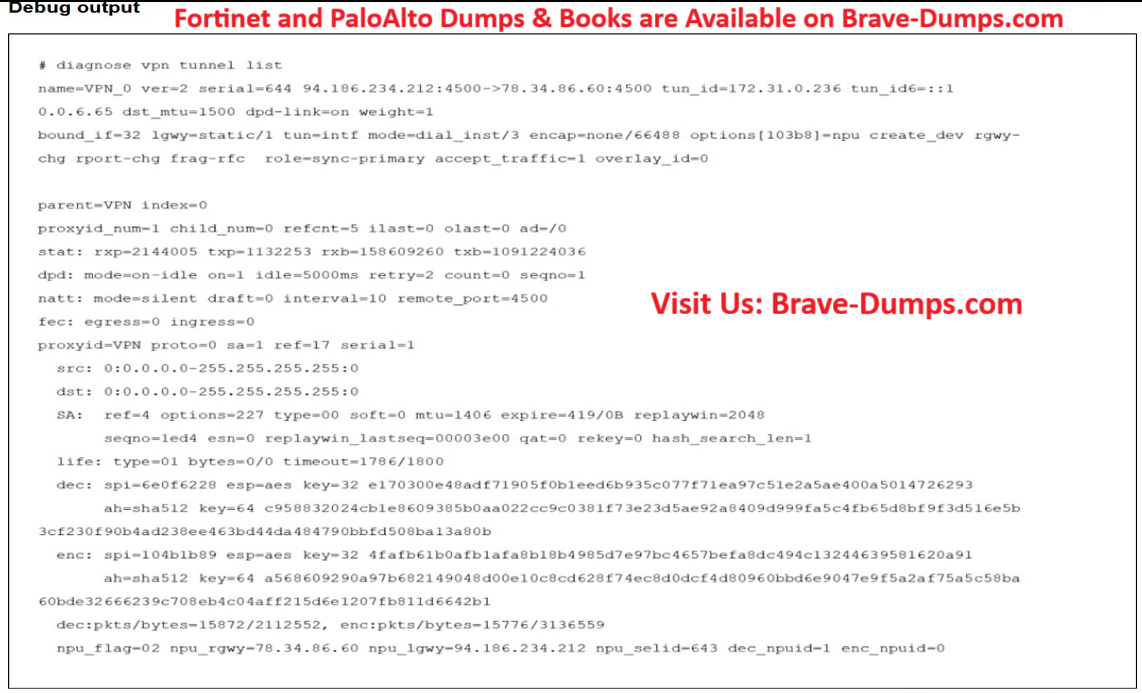
Refer to the exhibit.
The output of the command diagnose vpn tunnel list is shown.
Reviewing the debug command, what is the current status of the traffic flowing through the tunnel?
(Choose one answer)
- A. NP6 is handling the offloading.
- B. The inbound IPsec SA was copied to the NPU.
- C. The inbound and outbound IPsec SAs were copied to the NPU.
- D. The outbound IPsec SA was copied to the NPU.
Question #7
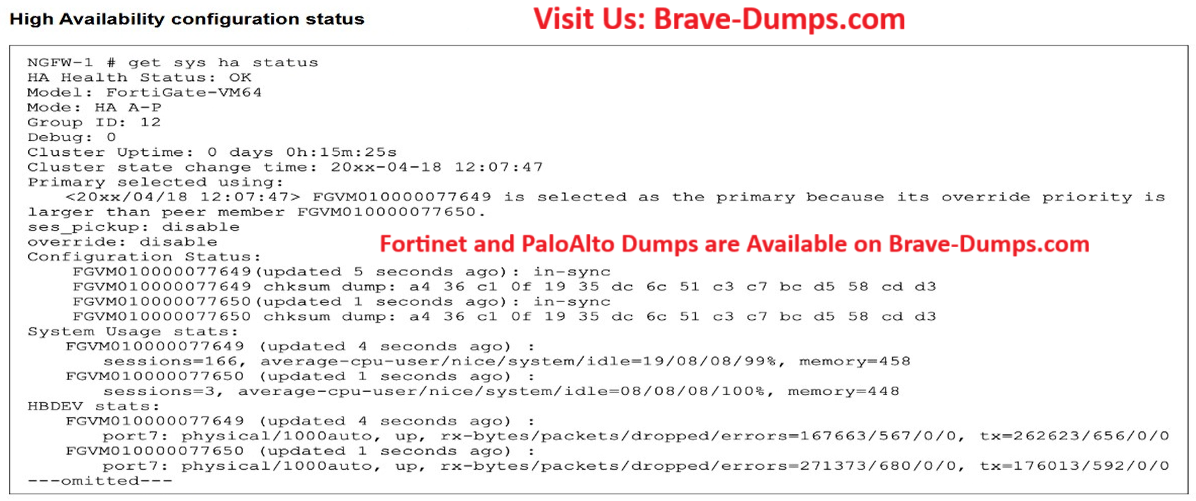
Refer to the exhibit.
Which two statements about the output are true considering NGFW-1 and NGFW-2 have been up for a week?
(Choose two answers)
- A. If FGVM...649 is rebooted, FGVM...650 will become the primary FortiGate and retain that role, even after FGVM...649 rejoins the cluster.
- B. If port7 becomes disconnected on the secondary FortiGate, both FortiGate devices will elect themselves as primary.
- C. If a configuration change is made to the secondary FortiGate, the Configuration Status will not change.
- D. If a configuration change is made to the primary FortiGate at this time, the secondary will initiate a synchronization reset.
Question #8
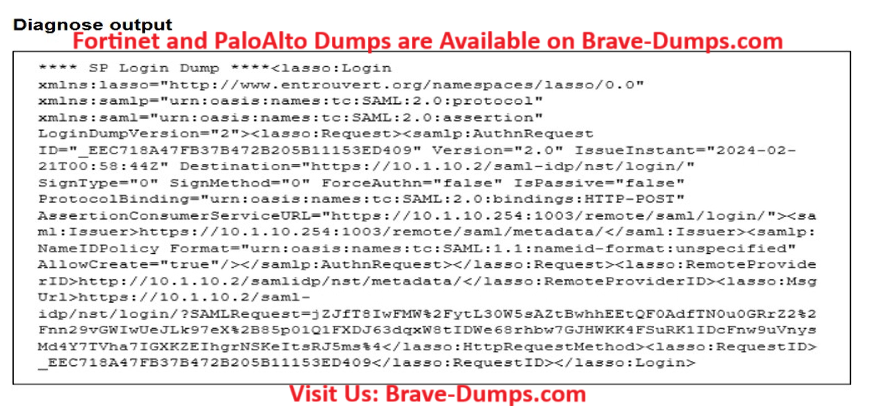
Refer to the exhibit.
The output from using the command
diagnose debug application samld -l
to diagnose a SAML connection is shown.
Based on this output, which two conclusions can you draw?
(Choose two answers)
- A. The IdP IP address is 10.1.10.254
- B. The SP IP address is 10.1.10.254
- C. The SP IP address is 10.1.10.2
- D. The IdP IP address is 10.1.10.2
Question #9
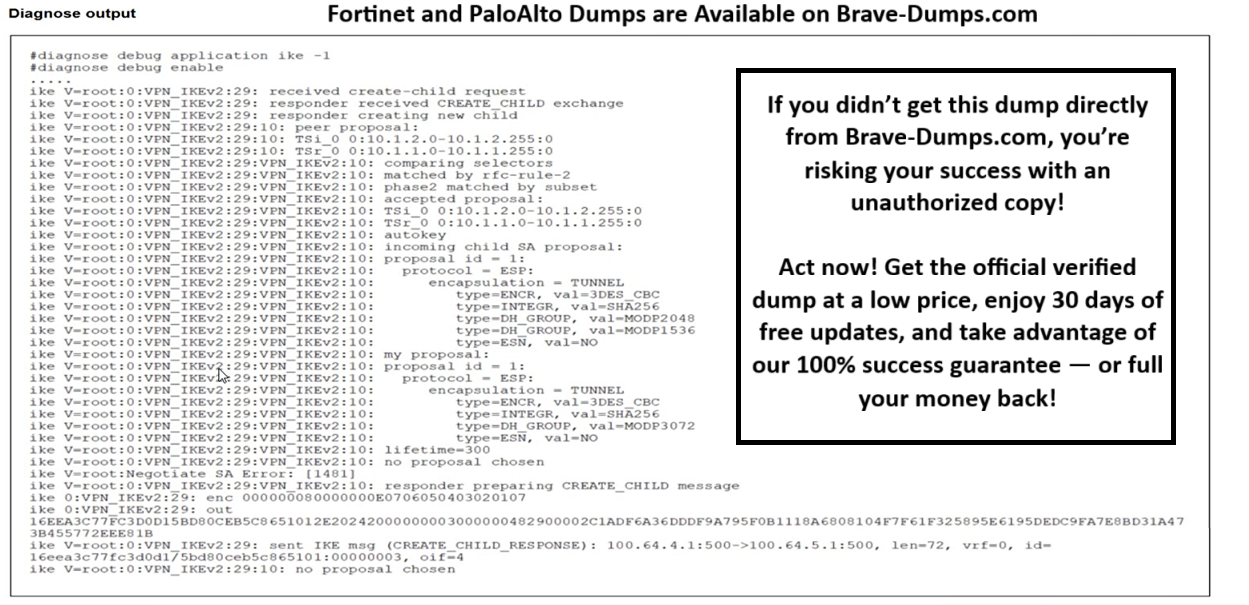
Refer to the exhibit.
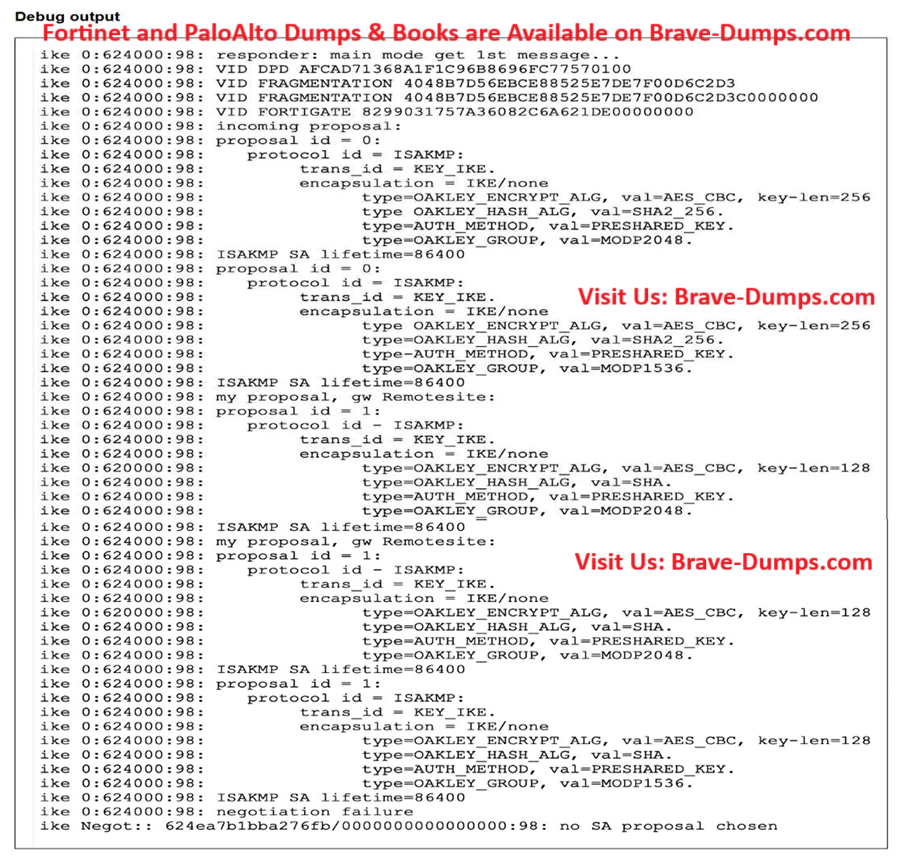
An IPsec VPN tunnel using IKEv2 was brought up successfully, but when the tunnel rekey takes place the tunnel goes down.
The debug command for IKE was enabled and, in the exhibit, you can review the partial output of the debug IKE while attempting to bring the tunnel up.
What is causing the tunnel to be down?
(Choose one answer)
- A. A mismatch in the Phase 2 negotiations
- B. Blocked traffic on UDP port 500
- C. A Diffie-Hellman mismatch
- D. A mismatch in the Phase 1 negotiations
Question #10
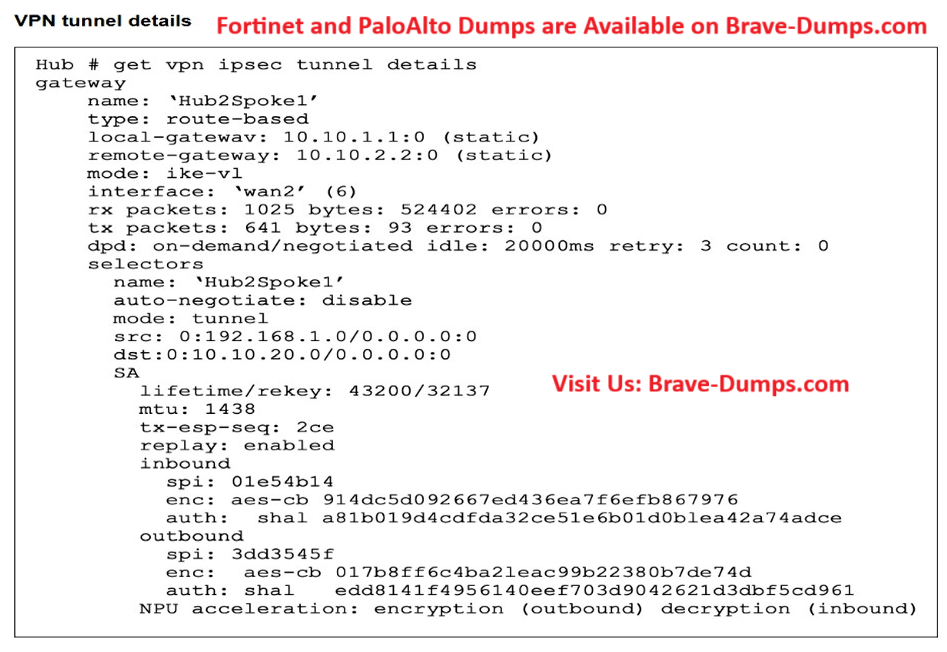
Refer to the exhibit.
Partial output of the get vpn ipsec tunnel details command is shown.
Based on the output, which two statements are correct?
(Choose two answers)
- A. Different SPI values are a result of auto-negotiation being disabled for phase2 selectors.
- B. The npu_flag for this tunnel is 03.
- C. Anti-replay is enabled.
- D. The npu_flag for this tunnel is 02.
Refer to the exhibit.
A partial output from an IKE real-time debug is shown.
The administrator does not have access to the remote gateway.
Based on the debug output, which two conclusions can you draw? (Choose two answers)