View all questions & answers for the NSE 6 – LAN Edge 7.6 Architect Exam Materials exam
NSE 6 – LAN Edge 7.6 Architect Exam Materials-Question 76 Discussion
Comments
Selected Answers: A, B, E
❌ INCORRECT - RSSO groups only need to be used in policies that require user-based access
This is a policy design choice, not a technical requirement for RSSO to function
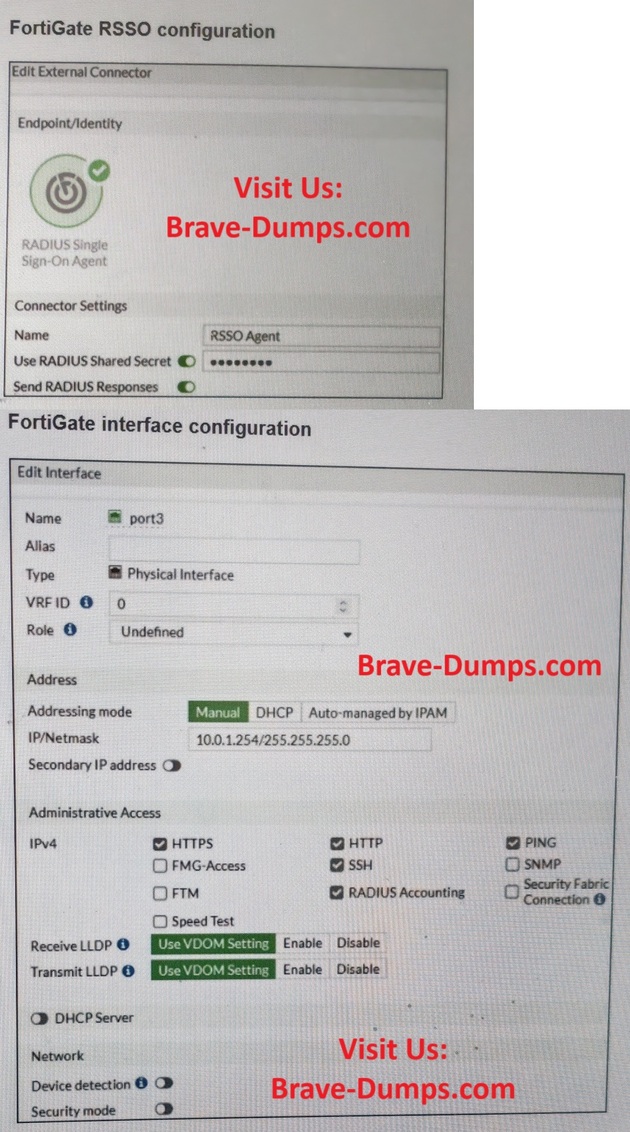
✅ B. The rsso-endpoint-attribute CLI setting in the RSSO agent configuration should be set to User-Name.
✔ CORRECT - rsso-endpoint-attribute defines how the user identity is extracted
The username is provided in the: User-Name attribute
Therefore:
set rsso-endpoint-attribute User-Name
is required.
Selected Answers: A, B, E
is required.
Refer to the exhibits. Examine the FortiGate RSSO configuration shown in the exhibit. FortiGate is set up to use RSSO for user authentication. It is currently receiving RADIUS accounting messages through port3. The incoming RADIUS accounting messages contain the username in the User-Name attribute and group membership in the Class attribute. You must ensure that the users are authenticated through these RADIUS accounting messages and accurately mapped to their respective RSSO user groups. Which three critical configurations must you implement on the FortiGate device? (Choose three answers)
Brave-Dump Clients Votes